
for sssssssGood tools make work easier and safer. Workers need their tools to always perform as expected, lastmany years, and allow them to focus on the task rather than worrying about the equipment. The best electrician tools support professional workers across all sectors, and to electricians, they are simply essential.
The best electrician tool brands are worth every penny because they hold up day after day under use in real-life, complex situations. The right toolkit is like a trusted partner, because it helps you make precise cuts without mistakes and verify things with confidence. It is possible to go to any store and grab a random set, but that’s not the same as investing in tools you can lean on year after year.
When reliability isn’t optional
When it comes to an electrician’s work, lives depend on it. That’s why professionals go toward brands with good reviews. Tools that dont have the proper insulation or aren’t durable can cause dangerous situations. And that’s why some names appear on pros’ lists of go‑to gear time and time again, such as Klein Tools, Fluke, Milwaukee, and DeWalt.
You need to pick the tools that work when you need them, because electricians work with many emergencies. Cheap knockoffs might save money at first, but over time, they can cost more in replacements, and it’s not worth risking anything. In this business, good reviews are essential, but the recommendations of trusted professionals are more valuable to other workers than any advertisement.
Along with using the best tools, electricians should also pay attention to proper footwear, as foot protection reduces the risk of injuries. Here are some of the best boots and how to find what fits your niche.
Tools Every Electrician Needs
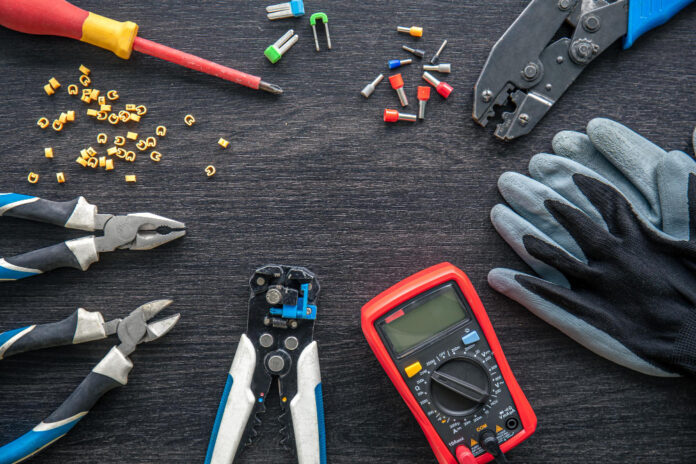
- Pliers and Wire Cutters: These are present in every electrician’s belt. Lineman’s pliers, sometimes just called “Kleins” in the U.S., can be used for many things, such as gripping, bending, and cutting wire. Side‑cutting and needle‑nose pliers are more precise in tighter spaces.
- Wire Strippers and Crimpers: When they work, electricians need to remove insulation without damaging the conductor, and they use wire strippers for this purpose. Tools that handle both stripping and crimping exist. These help streamline tasks without switching devices.
- Screwdrivers and Nut Drivers: Professionals use insulated screwdrivers rated for electrical work, which reduce shock risk and give control when tightening. Screwdrivers, like other tools, need to feel good in your hand, so you can use them with confidence.
- Testers and Multimeters: Before electricians touch anything, they have to test it for electricity. Non‑contact voltage testers are a safety staple, a tool that confirms whether a conductor is live without direct contact. There are also digital multimeters on the market, versatile tools that measure voltage, current, and resistance.
- Power Tools: Every worker needs drills, impact drivers, and other cordless tools speed up installation. The most common ones are those with long‑lasting batteries and rugged designs.
- Measuring and Alignment Tools: For tape measures, usually 25 feet or longer are common in the U.S. Workers use them to be sure they get the placements right, because this means fewer mistakes down the line.
Best brands on the market
Some brands come up because their gear holds up on job sites day after day. Some stand out for how long they last under tough conditions. Others, for feeling balanced in hand during long shifts. Reliability shows in small details that others overlook. What matters most isn’t flashy features but tools that work without question every single time
Klein Tools
A name that shows up often in American electrical work is Klein Tools. Starting way back in 1857, they set out to make tools just right for people dealing with electrical jobs. From pliers to testers, screwdrivers to fish tapes, their stuff answers real needs faced on site. They are built tough yet highly functional. Trust comes not from updates, but from things simply holding up over time.
Top of the charts often, Klein is trusted by professionals who rely on its modest range of electrician tools, each shaped by years of real-world use.
Fluke
Fluke is a company that sells devices for measuring electricity. When electricians need trustworthy results, they reach for them, because they hold up under tough conditions. Their tools, such as meters, detectors, and calibrators, are made to measure with exactness, because they need to pass the most harsh inspectors.
Fluke’s meters cost more than most others on the market, but people tend to trust them because they deliver accurate readings over time.
Milwaukee
For cordless powertools and accessories, Milwaukee has won a strong following in construction. What stands out is how their drills, impact drivers, and battery setups deliver steady power throughout extended workdays. Many electricians like Milwaukee because their tools integrate with a wide range of batteries and chargers.
DeWalt
DeWalt is another major brand with a broad lineup that includes power tools, hand tools, and accessories for electricians. They are known for durability and a wide distribution network. DeWalt has many good options for tools, and they have good prices.
Wiha and Wera
Wiha and Wera are German brands that have become popular in the U.S. market for precision hand tools. Electricians use their insulated screwdrivers and bit sets. The smooth build gives these tools a balanced feel during use. Because of smart grip shapes, they stay comfortable even after long tasks. Many pros choose them for detailed jobs where control matters.
Ideal Industries and Greenlee
Both of these are brands with strong roots in electrical tools. Ideal is known for quality wire strippers, crimpers, and testers. Meanwhile, Greenlee built its name on dependable benders and powerful knockout kits, even stepping into bulkier gear. Electricians see these names again and again because their tools match real-world demands. With deep ties in electrical work, both brands show where function meets consistency.
While there are a lot of brands out there that promise the best quality of tools or the best prices, it’s important to find a good middle ground. And for the best recommendations, it’s always a good idea to ask other professionals, because they are the ones who actually use most of these tools for many years, and know all the tips and tricks to get the best of the best.
Cost and Quality
Especially if you are a beginner, there’s a balance to strike when buying tools. You don’t need the fanciest version of everything, just the ones that do their job reliably. Start by spending more on the essentials you’ll use every single day: pliers, screwdrivers, testers, and a reliable multimeter. Things you might use less often, like conduit benders or specialty drivers, you can get those in mid‑range or add them later as needed.
For example, simple multifunction wire stripper pliers with a built-in voltage tester can be found online for under $30. They do their job, but they tend to lack the precision of professional gear.
For decent tools that don’t cost a lot, Milwaukee and Klein have examples of products that often cost significantly less than premium brands but perform decently on routine tasks.
For tools you use every day or under tough conditions, higher-end brands tend to justify their cost. A professional digital multimeter is a good example: models like the Fluke Measurement Tool can cost hundreds to over a thousand dollars, but are backed by rigorous safety certifications.
How to care for your tools
Even the best electrician tool needs help keeping up after working in rough conditions for so many years. Just a little extra care can prolong their life and make sure that they work the same way as they did the first day you got them, even after many years. What you can do:
- Wiping tools clean after each job
- Keep each one in its own box or bag
- Look for signs of damage, spots where the coating is cracked, or pieces that move
- Sharpen the blades and keep clean contacts on testers
- Replace parts as needed
Apart from keeping things neat, you can try a cushioned case to stop tools from getting dinged up. Pegboards line everything up so nothing gets lost or scratched by chance.
Final Thoughts
Over time, what an electrician carries shifts, shaped by practice and the variety of tasks faced. With each new piece added, certain items stand out, becoming go-to choices almost on instinct. Those are the true best electrician’s tools for you. Prioritize quality where it counts and don’t skimp on items that affect safety and efficiency.
Most pros in the U.S. will tell you that you don’t need to buy everything at once, but you do need to choose tools that feel reliable and suited to the work at hand. And his goes bor both beginners and those upgrading worn‑out gear. Focusing on the best electrician hand tools and respected tool brands is an investment that pays back in lower frustration and more predictable performance, even on the trickiest jobs.