
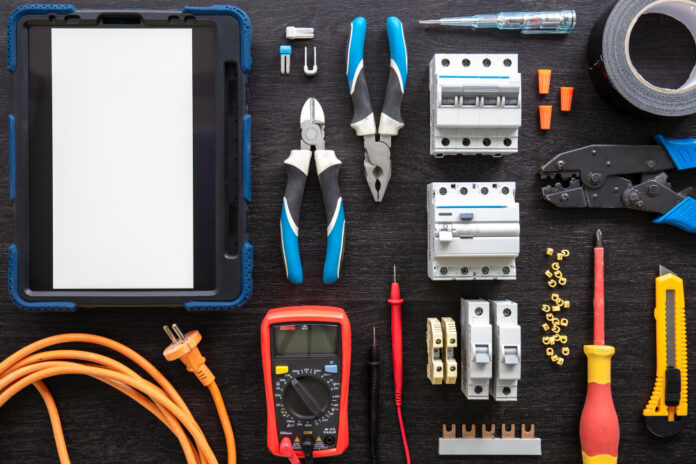
Electricians keep our whole lives powered, quietly, in the background, and most don’t even notice their presence until they need them. To do their job, they need tools they can rely on. From homes built in the 1950s to new office buildings and industrial plants, all electricians have to work safely and efficiently under pressure. So what tools do electricians use? It depends on what kind of work they do. Tools adapt, because environments never stay the same, and depending on the task, there are many different tools. We’ll take a look at the electrician’s most appreciated and used tools.
Essential Tools for Electricians
Before separating work, there is a baseline set of tools that nearly every electrician carries, no matter the specialization. An electrician’s best tools aren’t cheap, but they are built for daily use, not occasional projects. The tools electricians need are designed to survive jobsite conditions, and experienced electricians know it’s better to buy one good tool than replace a cheaper one three times.
If you’d like to know more about the different types of electricians and if any of them might fit you, read it in Understanding What Electricians Do in Residential and Commercial Projects.
Hand Tools
Most electricians rely on these:
- Insulated screwdrivers (flathead and Phillips)
- Lineman’s pliers
- Needle-nose pliers
- Diagonal cutters
- Wire strippers matched to standard U.S. wire gauges
For these, electricians mostly go towards brands like Klein Tools, Wiha, and Ideal. These tools hold up under daily use and have consistent insulation and tolerances.
Testing and Measurement Tools
Electricians test before touching anything, sometimes even two times. That habit comes from experience, and that’s why they need to know they can rely on what their testers say. A faulty reading can waste hours, but also be dangerous.
- Non-contact voltage testers
- Digital multimeters
- Continuity testers
- Clamp meters
For these tools, the biggest manufacturers are Fluke, Amprobe, and Ideal.
Safety Equipment
We can’t talk about tools without mentioning safety equipment. Good equipment is very important, and that’s something electricians learn in school. It’s not just a preference, it’s required by OSHA regulations and the National Electrical Code. Some are:
- Voltage-rated gloves
- Eye protection
- Lockout/tagout devices
- Insulated mats when required
Residential Electrical Work
Often considered easier, residential work is far from that. Homes are full of tight framing, finished surfaces, renovations, and wiring decisions made decades ago. They work in many different environments, and besides making something work, they need to do it cleanly and without collateral damage. And most of the time, electricians are on their own, so they need to rely on their own judgment, and most importantly, their equipment.
Tools Commonly Used in Residential Settings
Residential electricians’s tool are all about control:
- Fish tape
- Flexible drill bits
- Cordless drills
- Stud finders
- Levels for accurate device alignment
Non-contact voltage testers get constant use, because in older U.S. homes, it’s very common to find mislabeled panels and shared neutrals. Trusting the breaker label alone is a mistake that you can’t make as a professional electrician.
Outlet, Panel, and Fixture Tools
In residential work, there are a lot of devices to install, and that job falls on the electrician. For that, they use:
- Torque screwdrivers for terminals
- Receptacle testers
- Panel labeling tools
Using the correct torque is non-negotiable. If you have any loose connections, it can create heat, and heat creates failures and bigger problems down the road.
Low-Voltage and Smart Home Equipment
Modern residential electricians handle:
- Ethernet crimpers
- Cable testers
- Low-voltage staplers
- Labeling systems
These are used for smart lighting and security systems, because these, as well as structured wiring, are now standard requests in many U.S. markets.
Commercial Electrician Tools
Commercial electrical work is done at a much larger scale. Larger buildings mean heavier systems and more oversight. They rely on conduit-based wiring systems. Because of that, it must meet strict NEC and local code requirements, and this changes the tools required.
Conduit and Raceway Tools
Commercial electricians spend a lot of time working with conduit. For this task, they need:
- Manual conduit benders for EMT
- Hydraulic benders
- Threading machines
- Reamers
- Band saws and chop saws
- Conduit levels
Power Tools for Commercial Jobs
For power tools, brands like Milwaukee, DeWalt, and Makita are appreciated in the U.S. due to battery systems that hold up.
- Rotary hammers for concrete
- Impact drivers
- Core drills
- Cable pullers
Testing and Diagnostic Equipment
Commercial systems require deeper diagnostics, done with:
- Clamp meters
- Insulation resistance testers
- Circuit analyzers
Industrial Electricians: Tools for High-Stakes Environments
Industrial electrical work is done in factories and industrial plants, so their work is usually more complex. They work under pressure and have to maintain the equipment rather than fix it because problems usually cost money and time. The electrical systems are behind all of the automation and motors of a factory, so if they fail, they cause expensive and dangerous mistakes.
Heavy-Duty Electrical Tools
Industrial electricians use:
- High-capacity cable cutters
- Hydraulic crimpers
- Busbar cutting and bending tools
- Explosion-proof hand tools in hazardous locations
Automation and Control Tools
Many industrial electricians work directly with control systems. For this, they need:
- PLC programming devices
- Industrial-grade multimeters
- Signal generators
- Calibration tools
Advanced Safety Equipment
When you work with such high-capacity machinery, safety requirements also need to be increased. NFPA 70E and OSHA standards influence the tool selection. Some tools that help with this are:
- Arc flash-rated PPE
- Hot sticks
- Grounding clamps
- Insulated mats
It’s very important to invest in gear from brands that have good reviews and are proven to work. Some examples of good brands are Klein Tools, Ergodyne and Wells Lamont.
Quality Tools Every Electrician Should Own
Advanced Electrical Testing Equipment
Basic voltage testers are fine for simple checks, but a professional electrician has to depend on the best diagnostic tools. They need a true RMS digital multimeter when working with modern electrical systems. Fluke, Amprobe, and Klein Tools are brands that are very appreciated because they are accurate under real-world conditions. The Fluke 117 + 323 Electrician’s Multimeter Kit has both a true RMS multimeter with non-contact voltage and a clamp meter.
Clamp meters are also important. You need to be able to measure current without disconnecting a circuit, which saves time and reduces risk, especially in commercial and industrial settings.
Another useful tool is the thermal imaging camera, used to detect overheating connections, such as Fluke’s TiS thermal camera. It is used usually by commercial and industrial electricians to identify hotspots before any problem rises.
Torque-Controlled Tools
One area where professional electricians tend to be more disciplined than casual installers is in using the torque. Torque screwdrivers and torque wrenches are used to ensure terminals are tightened to manufacturer specifications, especially in panels. They are more and more common now, even in residential and commercial work, because the codes are stricter about them.
Power tools
For professional electrical work, drills and screwdrivers won’t make it. On commercial and industrial sites, they use rotary hammers to drill through concrete and masonry, and right-angle drills, sometimes called hole hawgs. Milwaukee, DeWalt, and Makita are a few brands that are common. For example, the Milwaukee M18 Cordless Drill is reliable and preferred for its battery compatibility.
Conduit and Raceway Equipment
For conduit, electricians may use manual EMT benders, but hydraulic benders and electric threading machines make work more consistent for larger projects. There are also angle-measuring tools that help run conduit straight.
Safety Gear Used by Electricians
Before every single tool, safety equipment is an integral part of professional electrical work. They are not simple clothes that work with every trade. They are made specifically for electricians with fabrics and materials designed to resist electrical current and reduce the risk of shock in case of an accident. For this, electricians use arc-rated clothing, voltage-rated gloves, insulated hand tools, and face protection when working.
In industrial settings, there are additional safety tools, like hot sticks, grounding clamps, and insulated mats.
Klein Tools has voltage‑rated gloves and insulating sleeves. Ergodyne or Wells Lamont makes protective workwear designed to stand up to electrical exposure.
Tool Storage
Electricians need to be very careful with their tools and how they keep them organized, for more than one reason. First, they work in places where time is valuable, and mistakes can be costly, so having tools accessible makes a significant difference. For this, they usually use rolling tool carts, storage boxes, and tool belts.
Milwaukee PACKOUT and DEWALT TSTAK are some brands that make good tool storage.
For smaller tools, electricians have everything within easy access with their tool belts. Rolling carts are better for larger, heavier tools.
Tips to improve organization
- Keep similar tools together
- Label drawers and boxes
- Store sensitive equipment like multimeters and testers in padded compartments.
- Check and return tools to their assigned place
Final Toughts
As much as skill and experience matters, an electrician wouldn’t be able to do their job without ther tools. No matter where and how they work, in residential, commercial or industrial, the tools change, but they all need to be reliable. Every item in an electrician’s kit has a purpose, and electricians need to invest in quality tools and using the right safety equipment. This means tools that have good reviews, are accredited, but also feel good in your hands and give you confidence. With the right tool, every electrician will gain the power to finish a job efficiently and safely, and go home knowing that they did a good job.