
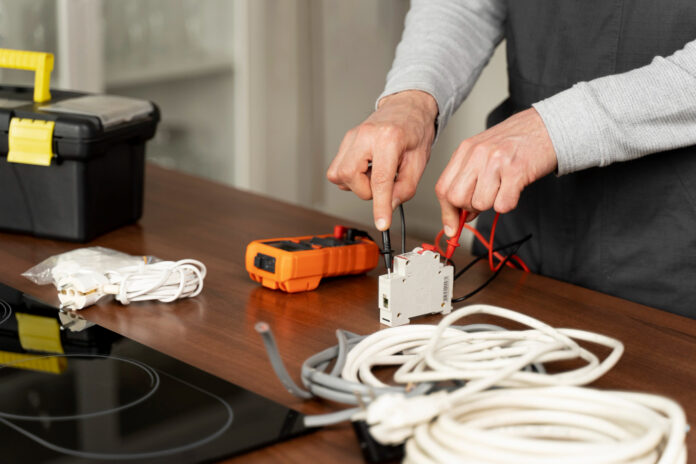
When people think about Alaska, the first thing that comes to mind is endless Taiga, snow, and fishing boats, and probably not the buzz of the city lights. They don’t always picture electricians, but they are just as needed as everywhere else. Wires run everywhere, and when it’s forty below, it’s even more important that somebody keeps the lights on. If you want that somebody to be you, you are in the right place.
It’s useful, but hard work, for people who want stability and don’t back down from a challenge. Keep reading to find out what it takes to become a beginner electrician in AK, where you can train, and whether an electrician course in Alaska is worth your money and effort.
Why Electrical Training in Alaska is a Big Deal – And the Salary matches that
Compared to other states, Alaska has remote towns scattered across hundreds of miles, and winters that are rough for weak infrastructure. The electrical system ranges from brand new to so old that it should have been replaced years ago, and this created steady demand. Constant work, but also conditions that aren’t always ideal.
That’s why electrical training AK looks the way it does, because it’s focused on what works in the real world. More than anywhere else, it’s not focused on formulas and books, but on being able to troubleshoot something when it fails at the worst possible time.
The electrician salary Alaska reflects this reality. As of 2025, the median range for electricians sits around $80,000-$85,000 per year. For beginners on the lower end, the annual pay is around $50,000, while top performers can easily win over $110,000.
Entry-level apprentices usually earn about $35 per hour, which translates to a respectable wage given Alaska’s higher living costs. Journeyperson electricians with more experience can average $90,000 to $100,000 a year or even more in some postings, according to Indeed.
Where to start your training in Alaska
-
AVTEC – Industrial Electricity Program
AVTEC has one of the most comprehensive technical training programs for aspiring electricians in Alaska. The industrial electricity program focuses on core electrical skills, residential and commercial wiring, theory, and safety procedures.
Students receive hands-on training in lab environments. The program also introduces basic industrial systems and renewable energy concepts, useful in Alaska’s diverse energy sector.
Completion of the program counts towards the required hours for electrician licensing, depending on the career path that you prefer. This is an option for beginners or anyone who wants their information structured before entering the workforce or applying for an apprenticeship.
-
Alaska Joint Electrical Apprenticeship and Training Trust (AJEATT)
The Alaska Joint Electrical Apprenticeship and Training Trust offers a formal apprenticeship program. It combines paid training with classroom education. Programs are available in multiple locations, including Fairbanks and Anchorage, and are designed to meet state licensing requirements.
As an apprentice, you will work under licensed electricians while attending scheduled classes that cover all electrical theory. These apprenticeships last 4 to 5 years, and after accumulating the 8000 hours of work required, you are eligible for a full Journeyman Electrician Certificate.
To be qualified for this program, you will need to meet basic eligibility standards such as a high school diploma, a valid driver’s license, and passing an entrance assessment. If you need to earn an income while completing your electrical training, this could be the right path for you.
-
Electrical Engineering – University of Alaska Anchorage (UAA)
For a more academic focus course, the University of Alaska Anchorage offers an Electrical Engineering program for students who want to work on the design, analysis, and development side of electrical systems.
Unlike electrician training programs, an electrical engineer degree does not lead directly to an electrician license. But it open door to roles that involve system design, planning, energy production, all relevant in Alaska’s energy and utilities sector.
-
Ilisagvik College – Electrical Technology Certificate
Not everyone wants to jump straight into an apprenticeship. For those, Ilisagvik College offers a program that covers the basics (safety, tools, wiring, math). It’s more classroom-heavy, but a very good start when you are trying to wrap your head around new electricity concepts. While it doesn’t replace an apprenticeship, it can improve job readiness and competitiveness when applying for training programs or helper roles.
-
Associated Builders and Contractors (ABC) in of Alaska
ABC of Alaska provides a non-union apprenticeship program for individuals pursuing a career in electrical construction. The program combines classroom education with supervised work experience and follows all industry standards.
Here, you can receive education in electrical systems, code compliance, and job-site practices while working with participant employers.
Continuing Education and Licensing Preparation
After an initial training, electricians in Alaska are required to continue their education to maintain active licenses and stay up to date with current electrical codes and safety standards. All is overseen by the Alaska Department of Labour and Workforce Development. It involves the following steps:
- Completing required classroom instructions from an approved electrical training provider
- Accumulating documented on-the-job work hours (4000)
- Studying current National Electrical Code (NEC)
- Applying for the appropriate electrician license
- Passing required licensing and Cerificate of Fitness
- Completing ongoing continuing education
Final Thoughts
Having a career as an electrician in Alaska is not a very casual decision, but for many, it’s practical. In a place like this, so vast and wild, you can become the one who makes sure that the lights always stay on. Alaska offers several training paths, from classroom-based courses to structured, hands-on apprenticeships (see our New York guide for a similar overview.) And what’s best about electrical trainin gin AK is how closely it aligns with actual job demands. So if you are looking for a career with a strong long-term outlook, good salaries, where you can get your hands dirty doing things that matter, this could be a great choice for you.