
Some people have their careers decided very early, putting all their focus and motivation into accomplishing them. But becoming an electrician is not really like that. A choice like this comes from a slow realization that you enjoy working with your hands and solving problems that matter. It’s not a perfect career, but it’s one you realize could be perfect for you, especially looked at it with the priorities of an adult. It’s stable, makes good money, and it’s something that can fulfill you. If you’re here because you’re curious, maybe you have questions like what degree do you need for an electrician. The good part, the answers aren’t as rigid as people sometimes think.
Let’s look at the steps you need to take, what is required by law, and how different levels of schooling shape where you can go.
High School: The Foundation for Electricians
Before anything else, there is high school. To apply to most apprenticeship programs, you need a high school diploma or GED. Focus on subjects like maths and basic physics, they come up a lot during your further training and also during work. Even one good math course can make a world of difference when you’re reading electrical diagrams. Science courses are also useful. Some students also enroll in dual programs with local community colleges. Here, they can learn the skills while still in high school.
That’s the minimum for most training programs. You can’t really start anything without reading comprehension, algebra, and basic physics, because all show up again and again in real work.
You can still train to become an electrician later in life, even if you skipped this part. But it is a lot harder than it needs to be, because you will lack the baseline that everything else builds on.
Does College Matter? Degrees and Training
What degree do you need to become an electrician? You don’t need a bachelor’s degree for this career. In fact, most people do not have one. Instead, they choose courses that teach electrical work, like technical schools or apprenticeships.
Technical programs are offered by community colleges or trade schools. There, you have classes to learn the electrical theory and the safety regulations. Graduates earn certificates or diplomas. These programs are done before an apprenticeship, and don’t replace it, but students feel better prepared to enter the field.
Associate degrees in electrical technology are available, too. These programs go deeper into theory and sometimes business practices. You don’t need one for most electrician jobs, but they are good if you later plan to move into supervisory roles or more specialized niches.
For those starting their journey, you can find beginner-friendly programs in your area. For example, check out Best Electrical Courses for Beginners in Idaho.
Apprenticeship Programs for Electricians
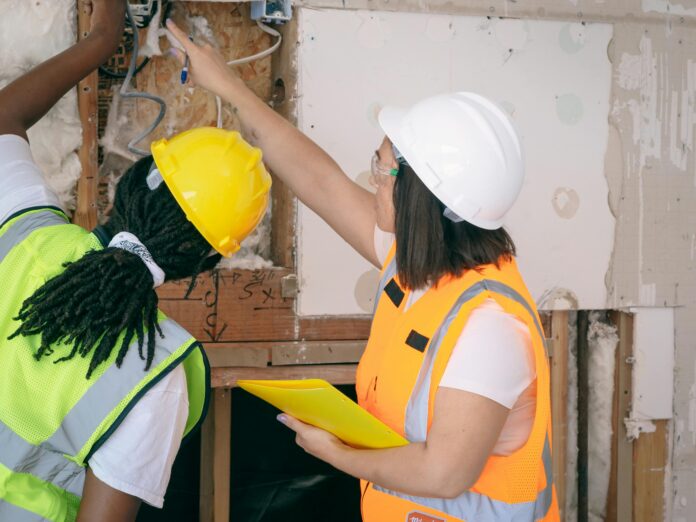
If you want to truly understand what education is needed to become an electrician, apprenticeships are the central point of training. Electricians learn how o do their job through a program that lasts 4 or 5 years. During this time, apprentices do 8,000 hours of paid training, but also classroom theory.
Those hours are structured, so you’re learning from professionals while doing real work and learning the trade from them. Sometimes, unions or contractor associations sponsor apprenticeships, and sometimes they are run by individual companies. Apprenticeship rules differ by region, but they have a similar concept. The International Brotherhood of Electrical Workers (IBEW) partners with the National Electrical Contractors Association (NECA) for programs in the U.S.
After you finish an apprenticeship, you can take a licensing exam. You need to be licensed if you want to work independently in almost every state, even if you’ve done hours and know your stuff. These exams test your grasp of electrical codes, everything you have learned in the classroom and in practice.
Job Growth and Demand
Data shows that electricians are in demand. According to the U.S. Bureau of Labor Statistics, about 800,000 electrician jobs existed in 2024. Employment grows in the coming years, creating more than 70,000 new jobs each year, so becoming an electrician makes more sense than ever.
That demand isn’t restricted to electricians working in homes, it spans construction, renewable energy, and everywhere there is power. There is actually a shortage of trained professionals, so the industry is aimed at getting younger workers into apprenticeships straight out of high school.
How Education Influences Your Earning Potential
Your experience and credentials will eventually influence your earnings during your career.
In the U.S., salaries depend on roles and experience level. As an apprentice, you start with a lower wage, but you earn more each year. Journeyman electricians, the license level people reach after an apprenticeship and taking their exams, earn more, and master electricians, those with a lot more experience, get a much higher pay.
For example, the annual salaries are around:
- Apprentice electricians: $47,000 per year
- Journeyman electricians: around $68,000 per year
- Master electricians: $80,000 or higher
Certifications and Further Education for Specializations
Once they learn basics , many electricians continue their education to specialize. For instance, electricians who want to work in renewable energy get something like the North American Board of Certified Energy Practitioners (NABCEP). To work with complex machinery, industrial electricians can take courses in programmable logic controllers (PLCs) or motor control.
Even as a residential specialist, there are certifications you can do in fire alarm systems, security systems, or low-voltage wiring.
It’s common to continue your education when you work in this trade, since electrical codes and safety standards change.
Final Thoughts
Becoming an electrician is not complicated: a high school diploma, training and apprenticeship, and a license. Degrees help, if you want to manage teams or advance in your field, but they aren’t required to work. Real experience and training are the most important part of the education in this trade. Good jobs are opening up each year, salaries grow with skill and time, and everyone seeks trained electricians
You can’t become an electrician by simply reading books or earning certificates. If you start on this path, you need to be fully in and learn from others to gain real competence. But once you do, you’ll have so many doors opening and a real good job waiting for you.