
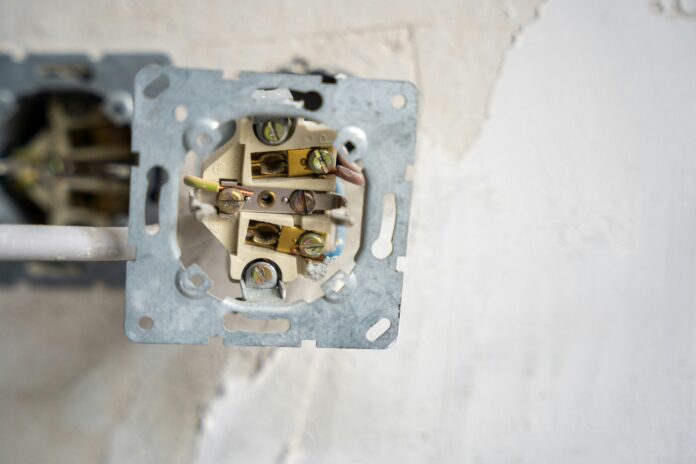
Taking care of a home is a source of pride for homeowners. When an electrical outlet stops working, it’s annoying, but also a safety risk. For those who know their way with tools, a broken plug is not a reason to worry. And following some clear safety steps, the job is done well, once and for all. This way, you keep your house running well and your family safe. There is a specific satisfaction that comes from restoring power to a room with your own two hands, knowing the repair is good enough to last for many more years to come.
Common Causes of Electrical Outlet Problems
Before you start, you need to find the root of the failure. Most issues are predictable:
- Breaker trips: Sometimes, the outlet lacks power because the circuit breaker at the main panel moved to the off position due to an overload.
- The shortcut: Builders sometimes use push-in connectors on the rear of the device. These connections don’t last as long as traditional screw terminals and can loosen.
- Thermal expansion: Electricity generates heat, which causes copper to expand and contract. This can eventually back out the screws that secure your wiring.
- Physical wear: If a plug feels loose or falls out of the socket, the internal metal tensioners have likely failed.
- Upstream GFCI interference: A tripped Ground Fault Circuit Interrupter can kill power to standard outlets downstream.
Tools Needed for Fixing an Outlet
A professional problem needs a professional kit. If you want to do a good job, these are the tools you need:
- Non-contact Voltage Tester.
- Plug-in Circuit Tester.
- Insulated Screwdrivers.
- Wire Strippers.
- Replacement Outlet.
Step-by-Step Guide to Fixing an Outlet
Once you confirm it’s a problem with the hardware, follow these steps to make sure your outlet is fixed safely.
1. De-energize the circuit
Locate your service panel and flip the breaker to the off position. Never trust the handwritten only the labels on the panel door. Use your voltage tester at the outlet to make sure the line is truly dead. For safety advice in case anything goes wrong, our article on electrical fires showcases what you need to do.
2. Extraction
Remove the faceplate and the two long mounting screws. Pull the outlet from the wall box slowly. Observe the wire configuration; perhaps take a photo with your phone for reference.
3. Connection and installation
If the old wire ends are brittle or charred, snip them off and strip back half an inch of copper. Attach the black or hot wire to the brass screw, the white or neutral wire to the silver screw, and secure the bare copper or green wire to the green hex screw.
Always loop the wire clockwise around the screw. When you tighten the fastener, it draws the wire tighter into the seat and doesn’t push it out.
4. Wire management
Fold the wires gently to tuck them back into the box. Don’t force them as this can pinch the insulation against the metal box edges. Secure the mounting screws and replace the cover.
Testing the Outlet After Repair
The only way to be sure that the outlet is working well is to test it. Restore power at the breaker and insert your circuit tester.
A correct reading has two amber lights. If you see a red light or a single amber, you likely have a reversed polarity or an open ground. For more details on what these readings mean, check the Electrical Safety Foundation International (ESFI).
When to Call a Professional Electrician
- If your home has dull gray wiring, it requires specialized CO/ALR connectors, otherwise you risk a fire.
- If the new outlet has an immediate trip, there is a short circuit elsewhere in the wall.
- If you smell ozone, a scent like chlorine or burnt plastic, there is a failure within the electrical system.
- If your home doesn’t have a ground wire, look at the National Electrical Code (NEC) guidelines for ungrounded upgrades.
Final Thoughts
Maintaining a house is a job that never really ends, and sometimes something breaks without a clear reason. But as long as you take the time to fix it the right way, it shows you value it. When you do these repairs with a steady hand and respect, you’re looking out for the safety of everyone under your roof. Small details matter, and these habits separate a temporary job from one that will stand the test of time. When everything is done, you can sit back knowing your home is as reliable as ever.