
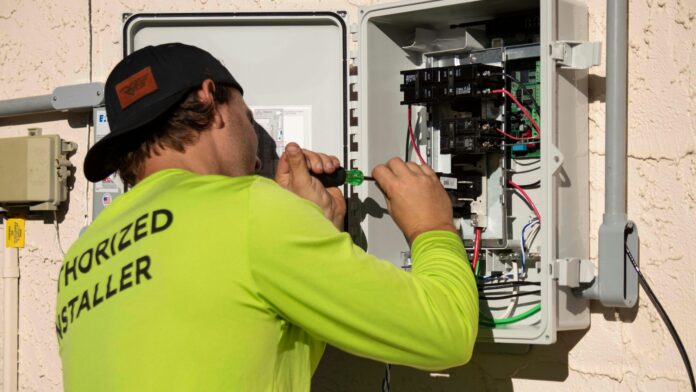
When you look at the electric work in a home versus a large office building, the difference is clear. Both jobs involve wires and power, but the actual work is quite different. Choosing between a commercial vs residential electrician depends on the type of building you own. A residential electrician knows the basics, but won’t be able to efficiently wire a factory. And besides their abilities, there is also the problem with building codes or power failures.
For any property owner, it is very important to know who to call. Commercial electrician vs residential use different tools, follow separate safety rules, and know how to handle different levels of voltage.
Differences Between Commercial and Residential Electricians
Power Supply: Most houses use single-phase power. It is enough for the normal appliances in a home. Commercial buildings use three-phase power, which is much stronger. This setup runs machinery and large AC units.
Wiring Protection: In a house, wires are usually covered in plastic and hidden in the walls. In a business, wires run through metal pipes called conduit. This protects the lines from being hit by equipment or damaged in an open ceiling. A commercial electrician has to know mechanical pipe bending and threading very well.
If you want to know more about electrician types and how their roles differ in residential and commercial work, this article is also a good place to start.
Skills Required for Commercial Electrical Work
Compared to the residential world, a commercial electrician is less of a handyman and more of a technical engineer. They read complex blueprints, so much so that it becomes a second language.
If you want to become successful, precision is what you need to train. For instance, bending conduit is a critical skill. If the pipe is not bent and fitted perfectly, the wires cannot be pulled through correctly, or worse, the metal edge can strip the insulation. You must also know load balancing. If a system is unbalanced, it generates excess heat, which leads to premature motor failure and massive energy bills.
According to the National Electrical Contractors Association, these roles need to have special training in high-voltage safety.
Understanding Residential Electrical Systems
Residential electrical work prioritizes two things: safety and appearance. While the voltages are lower, the electrician works within the constraints of a finished home. Electricians approach work in a house with “white-gloves”, and you rarely see this on a construction site.
A residential specialist spends their time making sure that a home is up to the standards set by the National Fire Protection Association. They install Ground Fault Circuit Interrupters in wet areas and Arc Fault Circuit Interrupters in bedrooms to prevent house fires.
It’s no surprise that modern homes are becoming more tech-dependent, and this is something that electricians deal with. They manage the installation of EV charging stations and smart home panels. It is a meticulous job, and to do it, you need knowledge of the specific codes for local municipalities.
Cost Factors for Commercial Electrical Services
The price tag for commercial work is a lot higher. It’s something that doesn’t really need explanation, especially when comparing the scope of the reparations. The materials used in a commercial setting aren’t bought at a big-box hardware store, they are built to a different standard.
- Material grade: A commercial-grade outlet or breaker costs a lot more than a residential version. These are designed to work 24/7 and do it perfectly under all conditions.
- Specialized equipment: Most commercial jobs are done not on the ground, but higher up, so you need scissor lifts and bucket trucks. Also, pros use high-end diagnostic thermal imagers to find hot spots in a panel.
- Labor prices: The insurance premiums for commercial contractors are on a different level compared to othe trades. They carry high-limit liability and workers’ compensation policies because the risks on a commercial site are much bigger.
A very big factor that people overlook that changes the financial outlook for commercial work is the administrative and operational parts. These are unique to big businesses. Yes, a residential permit can take a few days to get, but commercial approvals can stretch from four weeks to six months.
This red tape is lots paperwork and another layer of scrutiny. Every phase requires an official sign-off before the next can begin. Electricians don’t have a regular schedule and can’t really work a standard 9 to 5. Contractors work a lot during nights, weekends, or holidays, because that’s when the public doesn’t have access to the place.
Safety Regulations in Commercial and Residential Settings
Safety is the main reason these two roles are separate. Residential safety is about preventing accidental shocks and house fires. Commercial safety is about preventing industrial catastrophes.
Commercial electricians work under OSHA guidelines. One of the most important things is the Lockout/Tagout procedure. This way, no one can accidentally restart the power in a circuit while someone is working on it. This is a life-saving necessity. Electrical accidents are very common, and professionals wear protective gear, like fire-resistant clothing and face shields.
Choosing the Right Electrician for Your Needs
How do you determine which professional to hire? It depends on your property. If you want work done in your home, a residential electrician will be your best partner. If you are managing a retail space, a warehouse, you need a commercial electrician.
Always ask for references. A reputable commercial firm should be able to show you past projects Your electricity is the foundation of your property’s value, so do not cut corners.
Final Thoughts
Choosing between a commercial vs residential electrician isn’t such a difficult choice when you are informed. A residential expert focuses on home-specific hazards, while a commercial one manages high-voltage in businesses.
The world of electricity is changing fast. Relying on a specialist makes sure that your system stays up to code and runs without interruption. You protect your investment and, more importantly, the people inside.