
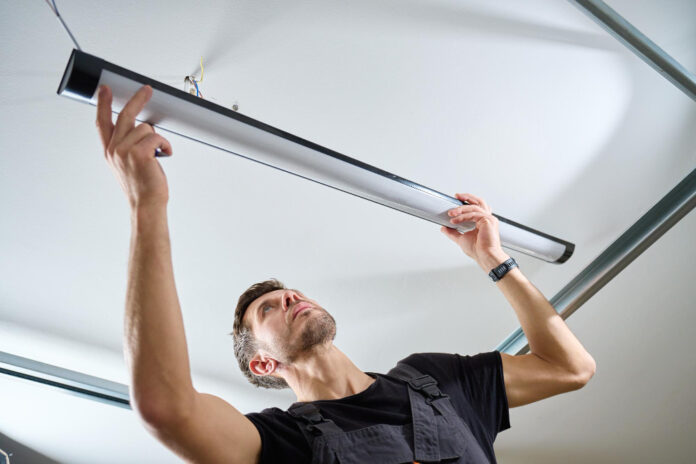
On most streets in the United States, electrical systems are a constant. The lights turn on, and appliances run, the system works so consistently that it doesn’t draw attention. That is, until it fails or until a renovation brings wires into view. Who handles this, and can you do it yourself? Behind all of that is a profession that prefers to prevent rather than react. Residential electricians are the electricians we see in our homes, and because of that, they have to comply with many safety rules.
So what does a residential electrician do? Their work consists of applying science, being careful of public safety, and helping owners with questions about their homes. Rules exist for a reason, each one created after years of electrical experience.
What Is a Residential Electrician?
A residential electrician is a licensed professional who works on homes and small residential buildings. But there’s so much more that these workers do. They are the electrical workers most homeowners know, and the ones who answer when something breaks in our houses. Residential electricians are trained to work with household wiring, because typical home electrical loads are different than, for example, those in a factory. The building codes for residential construction are different, so homeowners want a professional who knows what they are doing, because it’s a matter of their and their families’ safety.
To work in the United States, electricians have to meet state licensing requirements and complete an apprenticeship. During this time, electricians learn the theory, have supervised work experience, and then pass a written exam. Licensing keeps electricians up to code. Boards check skills, so jobs clear inspections and meet safety standards.
Key Differences
Though often grouped, residential and commercial electricians perform distinct tasks and work in different places. Homes shape the role of residential electricians. Because these jobs involve reduced voltage needs and small circuit sizes, they usually only train on them. Yet small wiring does not mean easier conditions, and residential electricians know their training is never over. If you want to know more about the different types of electricians, our article Types of Electricians: A Beginner’s Guide to Career Paths and Skills has more in-depth info to help you find what path you prefer.
What does a residential electrician do in a workday?
Everyone thinks that all electricians just repair what is broken. Fixing things belongs to their role, yet they go beyond it, handling tasks others overlook.
On a typical day, residential electricians may:
- Install or repair wiring
- Upgrade panels
- Test grounding and bonding
- Install safety devices
- Inspect work so that it aligns with the code
- Fix problems
In older homes, a lot of what residential electricians do involves upgrades. Houses were built before modern electronics, and back then, teh standards on safety weren’t at the same level they are now. Electricians replace outdated wiring and add circuits to support newer power needs. Rules change over time, and electrical workers make sure everything follows the latest version.
Why electrical codes matter
In the U.S., electrical codes are very important for a reason. They lead home safety, and lay out how everything should be: how wiring runs, what size conductors to use, how circuits are protected, how grounding works. And electricians must know them in and out and follow them every time they do something.
Residential electricians carry these rules every day. They follow the National Electrical Code (NEC), but they also keep tabs on local amendments, because they can differ depending on the county or state. The consequences of not following them are tangible, not only showing up badly on an inspection, but also putting lives in danger. For more information on this, the NEC outlines these standards, and the National Fire Protection Association provides updates and resources at nfpa.org.
Essential Skills
If you are thinking about becoming a residential electrician, there are sme skills that you need to focus on in order to pass your apprenticeship and your exams. First, every trade worker needs to know how to apply math in the hands-on jobs they perform. That’s why its important to strengthen your math skills in high school. Electricians use these skills to do electrical system calculations at job sites, and a lot of the times they do the math in their heads.
Being a residential electricians require you to have technical knowledge, have good problem-solving skills, and attention to detail. Electricians learn NEC and local codes during training and plan circuits effectively. A trained electrician might notice trouble without thinking, stopping accidents before they show any signs. A big part of being an electrician is attention to your surroundings at all times: keep an eye on anything that may turn dangerous. It also helps to have people skills, so to be a good communicator and know how to explain technical issues to homeowners in terms they understand.
Training and Certification
To become a residential electrician, there are a few steps you need to take. Starting from high school, your training must focus on maths and physics, then choose a trade school or apprenticeship that complies with state licensing. These programs teach you theory, they provide work, and they make sure you meet the National Electrical Code at every step. Then, it’s time for your licensure exam. Apprenticeships know how important it is to have their students do things the right way from the start. What they practice becomes second nature over time, and working safely turns into instinct. These habits become the foundation of safe work throughout their careers.
To pass your exam, you have to:
- Complete several hundred hours of classroom training
- Have the required hours of experience
- Study the National Electrical Code (NEC). The exam tests code knowledge extensively
- Demonstrate practical skills.
Licensing keeps things on track while meeting laws that protect the homeowners, as well as the electricians. Head over to nfpa.org if you want deeper insight into rules for licenses and wiring standards.
After that, there’s the exam. It’s usually state-specific, sometimes city-specific, because what works in New York might not in Atlanta. If you are looking for help with training for a specific state, check out our other articles, such as Best Electrical Courses for Beginners in Florida. But don’t think you can forget about training once you have that license. You need to continue your education, because NEC changes, and there are always new safety devices and evolving building practices you need to know.
Career Opportunities
Maybe becoming an electrician isn’t a very glamorous career at first glance. But when you take into account the demand, it offers many opportunities that people overlook. Those who install electrical systems are expected to see a rise in hiring through 2034, says the U.S. Bureau of Labor Statistics, roughly nine out of every hundred spots opening up yearly. Around eighty-one thousand new roles could be created annually, thanks to demand outpacing many other fields.
New tech opens fresh paths, and electricians who learn and adapt will face different work. Take solar panels, for instance, they’re spreading fast, creating demand. Charging spots for electric cars are everywhere, and smart homes bring new tasks. Training in these areas often leads to better pay, especially if you become a professional with the right credentials.
Final Thoughts
Residential electricians are the ones we call when something goes wrong in our homes, so everything they do and what they inspect needs to be by the book. When lives rely on you, following the code is non-negotiable, even when the rules are changing. Their training has a constant focus on safety, so that the work they do during their career is reliable. There is a lot of planning, skill, and care that goes into the systems most of us take for granted every day. Their expertise keeps homes running smoothly, behind walls, inside panels, and under houses, so the rest of us can have power without thinking twice.